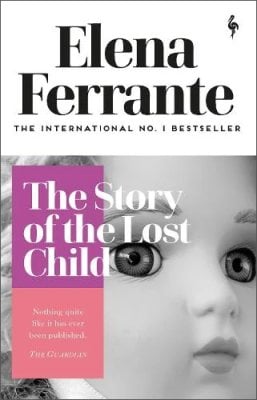
The Story of the Lost Child

The Story of the Lost Child cover
Good Books rating 4.0
Technical
  • ID: 692
  • Added: 2025-09-19
  • Updated: 2026-03-04
  • ISBN: 9781787700581
  • Publisher: Europa Editions UK
  • Published: 2015-09-10
  • Formats: 2
  • Reviews: 4

The Story of the Lost Child concludes the dazzling saga of Elena and Lila, two women whose friendship has shaped their lives in Naples. Now adults, they navigate marriages, families, and the magnetic pull of their hometown, each facing the consequences of their choices. Elena, a successful author, returns to Naples, drawn by the city's enigmatic allure, while Lila, a successful entrepreneur, finds herself entangled in the city's criminal underbelly. Against the backdrop of a changing world, Ferrante masterfully explores themes of identity, conformity, and the enduring power of friendship. This novel is celebrated for its unmatched honesty and brilliance, offering an intense, forensic exploration of friendship and the societal pressures that shape women's lives. Ferrante's writing is compelling and immersive, making it a standout in contemporary literature.

Reviews
Theresa Smith Writes · Theresa Smith · 2022-10-03
mixed 3.50

The book was felt to be overly long, particularly in the first half. Despite this, the emotional resonance and depth of the characters were appreciated.

Theresa Smith found The Story of the Lost Child to be excessively long, especially in the first half, which she felt could have been shortened by at least 100 pages. Despite this critique, she appreciated the emotional resonance and depth of the characters, which made the book a compelling read. The exploration of themes such as friendship, love, and personal growth was particularly noteworthy, though the pacing issues detracted from the overall experience.


Quick quotes

    It was far too long, at least 100 pages too long.

    The emotional resonance and depth of the characters were appreciated.

    The exploration of themes such as friendship, love, and personal growth was particularly noteworthy.

EuroLit Network · Rosie Goldsmith · 2015-09-15
bold 4.00

The rage and ferocious integrity of this novel are thanks to Ferrante's head-on exploration of feminism, motherhood, love and friendship. Some readers may find the themes challenging, but the novel's boldness is commendable.

Rosie Goldsmith from EuroLit Network highlights the novel's fierce exploration of themes such as feminism, motherhood, love, and friendship. She appreciates the novel's boldness and the author's unflinching approach to these complex issues. While some readers may find the themes challenging, the novel's integrity and passion are undeniable. Goldsmith commends the author for tackling these topics with such ferocity and depth, making it a memorable and impactful read. The novel's exploration of these themes is both thought-provoking and emotionally resonant, leaving a lasting impression on the reader.


Quick quotes

    The rage and ferocious integrity of this novel are thanks to Ferrante's head-on exploration of feminism, motherhood, love and friendship.

    Some readers may find the themes challenging, but the novel's boldness is commendable.

    The novel's exploration of these themes is both thought-provoking and emotionally resonant, leaving a lasting impression on the reader.

The Guardian · The Guardian Staff · 2015-09-03
profound 4.50

The novel evolves into a deeper exploration of the dark psychology of friendship. The conclusion of the Neapolitan series is seen as a weighty and impactful finale.

The Guardian's review highlights how The Story of the Lost Child transcends its predecessors by delving into the sinister aspects of friendship. The novel's ability to weave together themes of friendship, love, and personal struggle is praised for its depth and complexity. The reviewer finds the finale of the Neapolitan series to be particularly impactful, as it brings the characters' journeys to a satisfying and thought-provoking conclusion.


Quick quotes

    In this last instalment, the Neapolitan series mutates into a weightier exploration of the sinister psychology of friendship.

    The novel examines friendship, motherhood, politics, class conflict, and the project of writing.

    The rage and ferocious integrity of this novel are thanks to Ferrante's head-on exploration of feminism, motherhood, love and friendship.

Tony's Reading List · Tony · 2015-08-31
engaging 4.00

The book was enjoyed for the most part, but the protagonist's infatuation with Nino was seen as problematic. The emotional depth and complexity of the characters were highly praised.

Tony loved The Story of the Lost Child for its emotional depth and the complex portrayal of the characters. The narrative's exploration of friendship, love, and personal growth was particularly compelling. However, Tony found Lenù's infatuation with Nino to be a recurring issue that somewhat detracted from the overall experience. The book's ability to delve into the intricacies of human relationships made it a memorable read.


Quick quotes

    I loved The Story of the Lost Child for the most part.

    The one issue I had with the book was Lenù's infatuation with Nino.

    The emotional depth and complexity of the characters were highly praised.