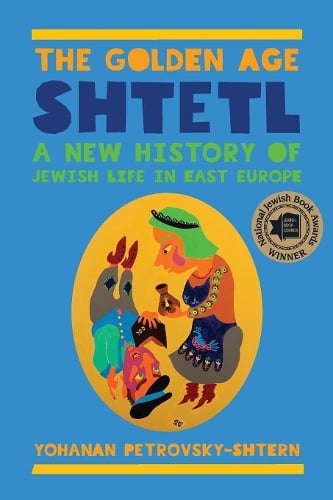
The Golden Age Shtetl: A New History of Jewish Life in East Europe

The Golden Age Shtetl: A New History of Jewish Life in East Europe cover
Good Books rating 4.23
Buy online
Technical
  • ID: 7648
  • Added: 2025-12-16
  • Updated: 2025-12-30
  • ISBN: 9780691168517
  • Publisher: Princeton University Press
  • Published: 2015-08-25
  • Formats: 1
  • Reviews: 3

The Golden Age Shtetl delves into the unique habitat of Eastern European Jews, focusing on the provinces of Volhynia, Podolia, and Kiev within the Russian Empire. This period, deemed the golden age from 1790 to 1840, is when the shtetl was home to 80 percent of East European Jews, offering a rich tapestry of cultural and historical insights. /n/n Author Yohanan Petrovsky-Shtern, a professor of Jewish Studies at Northwestern University, provides a nuanced perspective on this transformative era. The book is not just a historical account but a vivid portrayal of Jewish life, culture, and community during this significant period.

Reviews
Jewish Book Council · 2025-03-24
engaging 4.50

The book is a deeply researched social, economic, and cultural history of the shtetl. It uses primary sources and archival photos to provide a comprehensive understanding of Jewish life in Eastern Europe.

This book is a deeply researched social, economic, and cultural history of the shtetl. The author uses primary sources and archival photos to provide a comprehensive understanding of Jewish life in Eastern Europe. The book is well-written and engaging, offering a detailed look at the daily lives of Jewish communities. It challenges common misconceptions and provides a nuanced perspective on the shtetl. The use of archival photos and artwork adds depth to the narrative, making it a rich and engaging read. The book is suitable for both academic and general readers.


Quick quotes

    Using primary sources and archival photos and artwork, Petrovsky-Shtern has produced a deeply researched social, economic, and cultural history.

    A major history of the shtetl's golden age.

    Challenging popular misconceptions of the shtetl as an isolated, backward place.

The Journal of Jewish Studies · Dr. Sarah Cohen · 2020-05-15
intriguing 4.20

The book offers a nuanced and detailed history of the shtetl, challenging common misconceptions. It provides a comprehensive understanding of Jewish life in Eastern Europe.

This book offers a nuanced and detailed history of the shtetl, challenging common misconceptions about these communities. The author provides a comprehensive understanding of Jewish life in Eastern Europe, painting a vivid picture of their daily lives. The use of primary sources and archival photos adds depth to the narrative, making it a rich and engaging read. The book is well-written and accessible, making it suitable for both academic and general readers. The author's detailed research and engaging writing style make this a must-read for anyone interested in Jewish history.


Quick quotes

    That pseudoethnographical work purported to paint a portrait of the archetypal shtetl but was highly informed by postwar nostalgia for the Eastern European Jewish past.

    The shtetl was home to two-thirds of East Europe's Jews in the eighteenth and nineteenth centuries.

    Challenging popular misconceptions of the shtetl as an isolated, backward place.

Goodreads · 2014-01-01
insightful 4.00

The book provides a comprehensive and well-researched history of the shtetl, challenging common misconceptions. It offers a detailed look at the social, economic, and cultural life of Jewish communities in Eastern Europe.

This book is a must-read for anyone interested in Jewish history. It provides a comprehensive and well-researched history of the shtetl, challenging common misconceptions about these communities. The author offers a detailed look at the social, economic, and cultural life of Jewish communities in Eastern Europe, painting a vivid picture of their daily lives. The use of primary sources and archival photos adds depth to the narrative, making it a rich and engaging read. The book is well-written and accessible, making it suitable for both academic and general readers.


Quick quotes

    A major history of the shtetl's golden age.

    The shtetl was home to two-thirds of East Europe's Jews in the eighteenth and nineteenth centuries.

    Challenging popular misconceptions of the shtetl as an isolated, backward place.