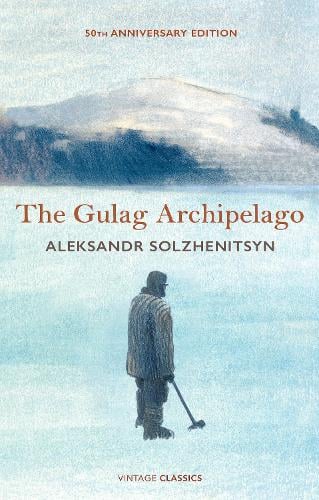
The Gulag Archipelago is a powerful account of the Soviet holocaust, documenting the imprisonment and brutalization of millions. Solzhenitsyn's work is a heroic effort to expose the truth and seek spiritual renewal, though his historical explanation is less convincing.
The Gulag Archipelago is a monumental work that chronicles the horrors of the Soviet penal system, known as the Gulag. Aleksandr Solzhenitsyn, a survivor himself, aims to document the full extent of the atrocities committed by the Soviet government, particularly under Stalin's rule. The book is a powerful narrative that combines the styles of an epic novelist, historian, and moralist, providing a detailed account of the suffering endured by millions of innocent citizens. Solzhenitsyn's primary goal is to ensure that the truth is acknowledged and condemned, hoping for national renewal through penitence. While the book is extraordinary as a chronicle of the holocaust, its historical explanation is less successful. Solzhenitsyn argues that the repression and violence were inherent in the Bolshevik revolution and Soviet political system, rather than an aberration under Stalin. This perspective, however, is seen as one-dimensional and selective in its historical evidence. Despite this, the book remains a crucial expose of the Gulag system and its impact on Soviet society.
Quick quotes
Solzhenitsyn feels a messianic obligation to 'all those tortured and murdered,' but even more to living and future generations.
The book transcends exposé, becoming an authentic literary re-creation of the 'native life and customs of Archipelago.
Solzhenitsyn utterly rejects the view that it was caused by an aberration in Soviet history in 1929-53 known as Stalinism.