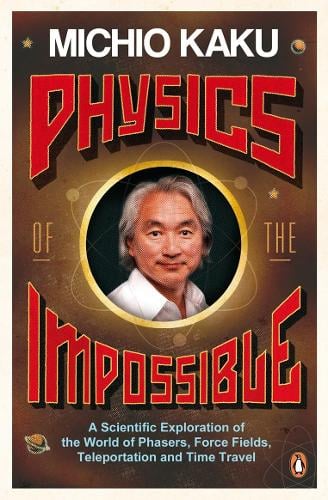
Physics of the Impossible: A Scientific Exploration of the World of Phasers, Force Fields, Teleportation and Time Travel

Physics of the Impossible: A Scientific Exploration of the World of Phasers, Force Fields, Teleportation and Time Travel cover
Good Books rating 4.0
Buy online
Technical
  • ID: 6264
  • Added: 2025-11-07
  • Updated: 2025-11-11
  • Formats: 1
  • Reviews: 3
Reviews
goodreads.com · Unknown · 2025-11-17
fascinating 4.00

Physics of the Impossible is a fascinating exploration of the science behind popular sci-fi concepts. The book is engaging and thought-provoking, offering a unique perspective on the feasibility of various futuristic technologies.

Physics of the Impossible delves into the scientific principles behind some of the most popular sci-fi concepts, such as teleportation, time travel, and force fields. The author, Michio Kaku, does an excellent job of breaking down complex scientific theories into accessible language, making the book enjoyable for both science enthusiasts and casual readers. The book is well-researched and provides a thought-provoking exploration of the boundaries between science fiction and scientific possibility. While some of the concepts discussed may be a bit too technical for some readers, overall, the book is an engaging and informative read that offers a unique perspective on the future of technology.


Quick quotes

    The book is a fascinating exploration of the science behind popular sci-fi concepts.

    It offers a unique perspective on the feasibility of various futuristic technologies.

    The author does an excellent job of breaking down complex scientific theories into accessible language.

theotodman.com · Unknown · 2025-10-31
exciting 4.50

Physics of the Impossible explores the scientific plausibility of technologies like teleportation, time travel, and force fields, categorizing them into three degrees of impossibility based on current scientific understanding. The book is praised for its accessible and engaging writing style, making complex scientific concepts understandable to a broad audience.

Michio Kaku's Physics of the Impossible delves into the fascinating world of science fiction, examining the feasibility of technologies that seem straight out of fantasy. The book categorizes these technologies into three degrees of impossibility: those that might be achievable in the near future, those that could take millennia to realize, and those that are currently beyond the laws of physics. Kaku's engaging and accessible writing style makes complex scientific concepts understandable, even to those without a background in physics. The book is not just a scientific exploration but also a journey through the boundaries of human imagination and the potential of future technologies. Readers appreciate Kaku's ability to make science both exciting and approachable, offering a glimpse into what might be possible in the future.


Quick quotes

    To gild the skills of a highly regarded and successful scientist by cultivating such an accessible and entertaining writing culture that is second to none in the current non-fiction field is at least as much a part of Kaku as the co-founding of string theory.

    The 'impossibilities of the first degree' includes expected inventions in the foreseeable future such as invisibility, force fields, artificial intelligence, robots, teleportation, psychokinesis, telepathy, nanotechnology, and antimatter.

    The 'impossibilities of the third degree' have entirely alienated themselves from the standard order of things and are therefore in an area of seeming an impossibility.

ft.com · Unknown · 2008-04-11
intriguing 3.50

The book explores the scientific plausibility of various science fiction concepts, categorizing them into three classes of impossibility. The reviewer finds the premise fascinating and the content accessible, though the writing style is somewhat repetitive.

Michio Kaku's 'Physics of the Impossible' delves into the scientific feasibility of futuristic technologies like phasers, teleportation, and time travel. The book categorizes these concepts into three classes based on their likelihood of becoming reality, with some surprises about what might be possible in the near future. The reviewer appreciates the engaging subject matter and the clear explanations of complex physics, making it accessible to a broad audience. However, they note that the writing can be repetitive, which slightly detracts from the overall enjoyment.


Quick quotes

    The premise of this book is fabulous. Take all the things which we've read about and seen in science fiction books, TV shows and films, and examine how possible, or impossible they are.

    The strength of the book is simply its source material. The whacky world of theoretical physics is one that should have interest to many beyond a purely scientific audience, especially when described in the largely layperson's terms used here.

    My one slight niggle is that while Kaku is relatively easy to read, he isn't the most inspiring author in the world.