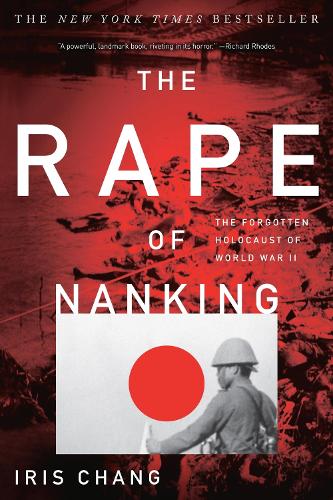
The Rape Of Nanking: The Forgotten Holocaust Of World War II

The Rape Of Nanking: The Forgotten Holocaust Of World War II cover
Good Books rating 4.0
Technical
  • ID: 6136
  • Added: 2025-11-03
  • Updated: 2025-11-29
  • ISBN: 9780465028252
  • Publisher: Hachette UK
  • Published: 2014-03-11
  • Formats: 2
  • Reviews: 4

In December 1937, the Japanese army committed one of the most horrific atrocities in wartime history, systematically raping, torturing, and murdering over 300,000 Chinese civilians and soldiers in the capital city of Nanking. Iris Chang, whose own family narrowly escaped the massacre, meticulously pieces together this dark chapter of history from multiple perspectives, including those of the Japanese soldiers, the Chinese victims, and a group of Westerners who created a safety zone to save nearly 300,000 lives. Drawing on extensive interviews and newly uncovered documents, Chang's seminal work is a definitive and undeniable tapestry of horror./n/nChang's book is not just a historical account but a poignant reminder of the human cost of war. Her thorough research and compelling narrative bring to light the voices of survivors and the heroic efforts of those who risked their lives to protect others. This powerful and unforgettable book serves as a testament to the resilience of the human spirit in the face of unimaginable tragedy.

Reviews
militaria.co.uk · Unknown · 2025-12-19
informative 3.50

Iris Chang's book provides a vivid and powerful account of the Nanking Massacre, drawing from extensive research and personal narratives. However, the book is criticized for blending facts with nationalistic assumptions and lacking a bibliography.

Iris Chang's 'The Rape of Nanking: The Forgotten Holocaust of World War II' offers a compelling and emotionally charged narrative of one of the most horrific events during the Pacific War. Chang's writing is praised for its ability to convey the brutality and human impact of the massacre, making it a shocking and unforgettable read. The book's extensive use of sources, including diaries and trial records, adds legitimacy to the narrative. However, the reviewer notes that Chang's work is not without flaws. The blending of facts with nationalistic assumptions and the absence of a bibliography are significant drawbacks. Despite these issues, the book provides a comprehensive view of the massacre, addressing the events leading up to it and the ongoing repercussions. Chang's analysis of the reasons behind the Japanese troops' actions and the attempts to erase knowledge of the massacre are particularly informative. Overall, while the book is highly readable and impactful, it is important to approach it with a critical eye.


Quick quotes

    Chang has written a vivid and highly readable account of the Nanking Massacre, one of the great atrocities inflicted on China by Japanese troops during the Pacific War.

    The writing is Chang's strong point. She describes in succinct and powerful language the battles leading up to the Nanking Massacre and the Massacre itself.

    The most interesting aspect of Chang's work is her blending of rumor and fact to flesh out a very interesting narrative.

goodreads.com · Unknown · 2025-12-19
harrowing 3.50

The Rape of Nanking by Iris Chang is a vivid and harrowing account of the atrocities committed by the Japanese army in Nanking during World War II. The book highlights the massacre and widespread rape, with estimates of victims ranging from 42,000 to 300,000. Chang argues that the incident is often overlooked in Western historical memory and attributes this to a politically-motivated conspiracy of silence in Japan. However, the reviewer criticizes Chang's generalizations and ethnic prejudices, noting that many Japanese have acknowledged and studied the massacre.

The Rape of Nanking by Iris Chang is a powerful and disturbing narrative of the brutalities inflicted by the Japanese army on the Chinese population of Nanking during World War II. The book provides a detailed account of the massacre, which began with the execution of Chinese prisoners of war and civilians, followed by indiscriminate killings and widespread rape. Chang presents estimates of the number of victims, ranging from 42,000 to 300,000, and questions why this atrocity is so little remembered in the West. She attributes the relative obscurity of the Rape of Nanking to a politically-motivated conspiracy of silence and an atmosphere of intimidation in Japan that prevents Japanese from facing their history. The reviewer, however, criticizes Chang's arguments, noting that her generalizations are often based on unexamined ethnic stereotypes and that she confuses the actions of some ultranationalist fringe groups with the broader Japanese population. The reviewer also points out that many Japanese have acknowledged and studied the massacre, with significant works published by Japanese scholars. Despite these criticisms, the reviewer acknowledges that Chang's vivid and gut-wrenching narration of the massacre is the strongest part of the book, bringing to light the heroic efforts of neutral foreigners who established the Nanking Safety Zone to protect non-combatants.


Quick quotes

    The incident was also a rape in a literal sense. According to evidence presented at the Tokyo War Crimes Trails, Japanese soldiers raped at least 20,000 Chinese women, many of whom were murdered afterwards.

    Iris Chang attributes this neglect to a politically-motivated conspiracy of silence and an alleged atmosphere of intimidation that prevents Japanese from facing their history.

    Chang generalizes from extremists who deny that the incident took place, fanatics motivated by ultranationalism and ethnic prejudice, who have as little credibility and moral authority as Holocaust deniers have in the West.

barnesandnoble.com · Unknown · 2025-12-18
harrowing 4.50

The Rape of Nanking is a harrowing account of the brutal massacre and atrocities committed by the Japanese army in Nanking during World War II. The book is praised for its comprehensive examination and compelling narrative, highlighting the systematic nature of the violence and the need for Japan to acknowledge and educate future generations about this dark chapter in history.

The Rape of Nanking by Iris Chang is a meticulously researched and deeply disturbing account of the atrocities committed by the Japanese army in Nanking during World War II. The book provides a comprehensive examination of the events, based on extensive interviews with survivors and newly discovered documents. The narrative is compelling yet unbearable in places, detailing the systematic rape, torture, and murder of hundreds of thousands of Chinese civilians. The author emphasizes that the massacre was not a temporary lapse of military discipline but a deliberate effort to terrorize, carried out in full view of international observers. The book concludes with an eloquent appeal to the Japanese government and people to face the truth about their wartime actions and to improve education about the massacre to deserve the respect of the international community.


Quick quotes

    The Japanese army not only looted and burned the defenseless city but carried out mass executions of prisoners of war and systematically raped, tortured, and murdered hundreds of thousands of Chinese civilians.

    Chang's account, based on extensive interviews with survivors and newly discovered documents, is utterly compelling yet, at the same time, in places unbearable to read.

    The author is at pains to emphasize that the massacre was a systematic effort designed to terrorize and carried out in full view of international observers, some of whom played heroic roles in trying to stop it.

jstor.org · Unknown · 2025-12-18
harrowing 4.50

The book provides a harrowing account of the atrocities committed during the Rape of Nanking, offering a detailed and sobering perspective on a often overlooked historical event. It serves as a crucial reminder of the importance of remembering and learning from such tragedies.

The Rape of Nanking: The Forgotten Holocaust of World War II delves deeply into the horrors that unfolded during the Japanese occupation of Nanking. The author meticulously documents the systematic violence and brutality inflicted upon the civilian population, painting a vivid and unsettling picture of the events. They emphasize the need for historical accuracy and the moral imperative to acknowledge and understand these atrocities. The book is not just a recounting of historical facts but also a call to action, urging readers to reflect on the broader implications of such events and the importance of preventing similar tragedies in the future. The narrative is both powerful and disturbing, making it a significant contribution to the literature on World War II and its lesser-known horrors.


Quick quotes

    The book is a stark reminder of the human capacity for cruelty

    . It is a testament to the resilience of the human spirit in the face of unimaginable suffering

    . The author's detailed account is both a historical record and a moral call to action

    .