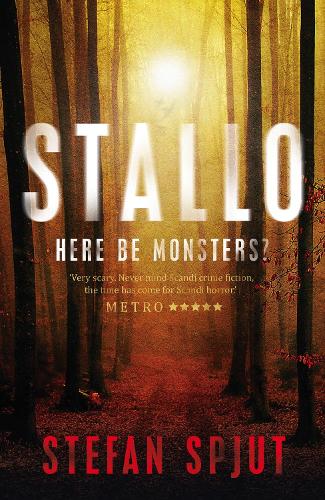
Stallo blends Scandinavian folklore with a modern detective noir thriller, exploring the dark and complex relationship between humans and ancient shapeshifting beings. The story is compelling, with well-developed characters and a gripping narrative that questions the nature of good and evil.
Stallo by Stefan Spjut is a unique blend of Scandinavian folklore and modern detective noir, weaving a tale that is both engaging and thought-provoking. The story follows Susso Myrén, an amateur cryptozoologist, as she investigates the existence of ancient shapeshifting beings known as Stallo. These creatures, rooted in Sami folklore, are initially portrayed as malevolent entities responsible for kidnappings and other dark deeds. However, as the narrative unfolds, the line between human and supernatural evil blurs, leaving readers to question who the real threat is. The novel is richly told, with razor-sharp characterisation and a gripping plot that moves rapidly across Sweden, tying together past and present in a compelling manner. It's a story that dares to ask profound questions about belief, connections, and the nature of good and evil, delivering a satisfying yet open-ended conclusion that leaves much to ponder.
Quick quotes
The truth, as always, is far darker and more complex than that, but as Stallo’s utterly-engrossing tale unfolds and zips forward to 2004, Spjut’s skilfully gives us cause to wonder whether its trolls or humans who are the more malevolent of beings.
Refreshingly Stallo mixes up the usual Scandi-noir vibe and narrative by artfully weaving tales of the Sami’s villainous trolls of old in such a way that they become essential characters in a story which moves rapidly up and down the length and breadth of Sweden, as the sighting of one ancient-looking man escalates into tales of kidnapping, attempted murder, lost lives and the ancient careering very much with the modern.
It doesn’t glibly serve up the usual suspects presented in a pedestrian manner where the obvious is the order of the day; instead it dares to ask the question, one that powers it through to its engaging, often thrilling and viscerally-satisfying end, who is the greatest threat — ancient being or man, and is life ever as simple as we would like to believe?