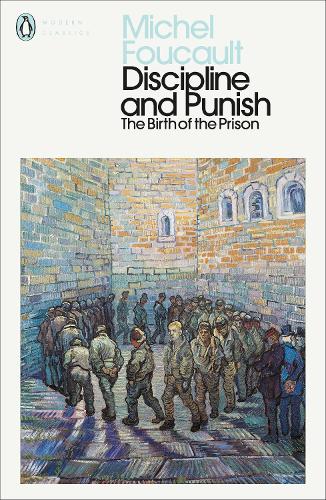
The review discusses Michel Foucault's 'Discipline and Punish' as a seminal work that explores the evolution of punishment and the rise of modern disciplinary institutions. It highlights Foucault's argument that power is not just repressive but productive, shaping individuals and societies in profound ways.
Michel Foucault's 'Discipline and Punish' is a groundbreaking work that delves into the transformation of punishment from public spectacles to more subtle, institutionalized forms of control. The book argues that modern societies have developed sophisticated mechanisms of discipline, such as prisons, schools, and hospitals, which function to regulate and normalize behavior. Foucault's analysis is not just about the history of punishment but also about the broader implications of power and knowledge in shaping human behavior. The review emphasizes that Foucault's ideas are still relevant today, as they provide a critical lens through which to view contemporary issues of surveillance, control, and social order. The book's insights are particularly valuable in understanding how power operates in everyday life, influencing everything from personal habits to societal norms.
Quick quotes
Foucault's analysis is both profound and unsettling
The book's insights are particularly valuable in understanding how power operates in everyday life
Foucault's ideas are still relevant today